How are power skills shaping education today?
As the educational and professional landscape undergoes significant change, so-called power skills are playing a fundamental role.
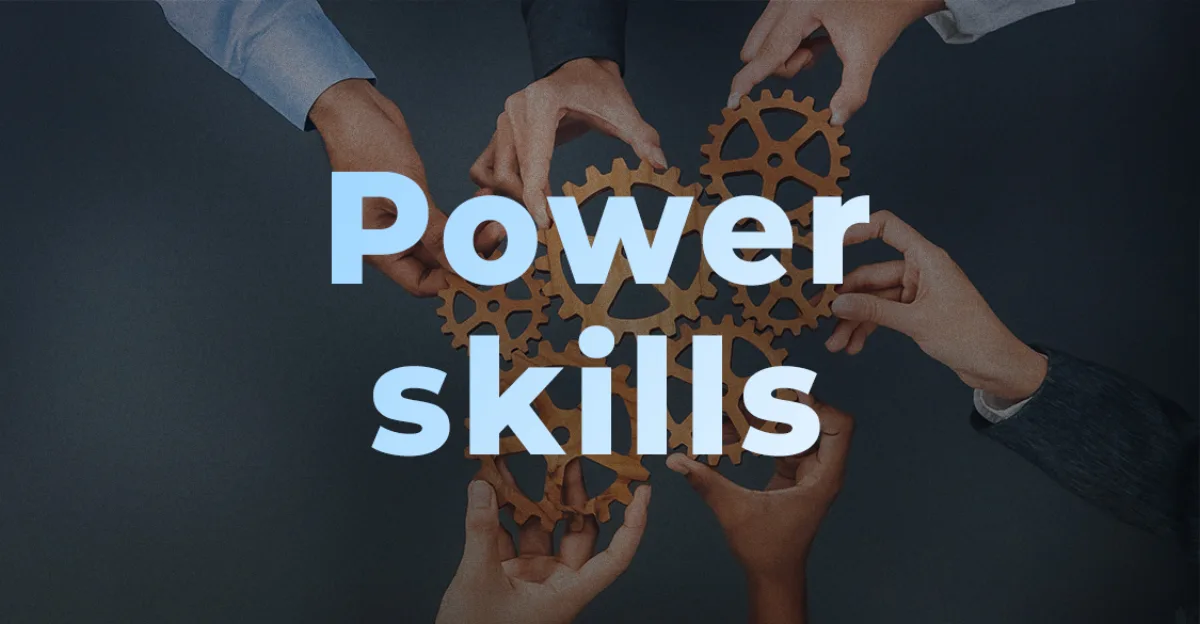
As the educational and professional landscape undergoes significant change, so-called power skills are playing a fundamental role. These soft skills, which go beyond traditional school knowledge, are increasingly valued by educational institutions and corporate organizations around the world. Want to know how to successfully integrate them into your academic management to strengthen your students' education? Here's how.
The importance of power skills in academic management: from the classroom to the workplace
Power skills have their origin in so-called soft skills. These are the personal and social attributes that influence how we interact with others. Rather than focusing on technical knowledge, they center on abilities that can be applied in many contexts (such as teamwork, leadership, critical thinking, emotional intelligence, etc.)
The soft skills that are in high demand in today's jobs are called power skills, and they can change as working environments evolve.
Today, as the world of work becomes more competitive and dynamic, employers are looking for people who have a well-rounded set of these skills in order to drive economic productivity in the coming years. They therefore prefer candidates who demonstrate:
- Adaptability to a constantly changing professional environment
- A commitment to continuous learning
- Creativity and innovation to tackle challenges and find new solutions
- A growth mindset focused on continuous improvement
- The ability to connect with others, work as a team and collaborate effectively with other professionals in multidisciplinary teams
However, this context calls for academic management based on a teaching approach that differs from the traditional one. Instead of focusing solely on transmitting information, educational institutions are adapting their curricula to encourage active learning, teamwork, experimentation, autonomy and reflection.
Don't miss: How ChatGPT impacts students' learning
On the path to professional success: integrating power skills into the classroom
Professionals need many power skills to succeed in today's job market. Below, we outline the ones that are gaining the most ground in classrooms and explain how you can apply them in your school's day-to-day teaching:
Self-leadership
This is the ability to direct and motivate yourself effectively, taking on responsibilities and challenges without relying on others' supervision. In other words, it means taking the initiative and relying on yourself to make things happen.
In the classroom, self-leadership can be strengthened by encouraging students' autonomy and decision-making, for example by giving them the opportunity to set personal goals, plan and organize their study time, and develop self-assessment skills.
Cultural and social intelligence
This is the ability to understand and adapt to different cultures and social contexts with empathy and respect for diversity. To develop it in the classroom, it is important to include activities that encourage cultural exchange, such as research into different traditions, discussions of global issues and projects that address social problems.
Attention to detail
This skill trains students to be precise and accurate when carrying out different activities. It helps them spot errors or inconsistencies more easily and ensure that every element of a project is carried out carefully, meeting objectives on time and as expected.
The best activities for fostering attention to detail are those that require careful observation and strong analytical skills, such as solving complex problems, editing texts or reviewing scientific experiments.
Personal learning
In a constantly changing professional landscape, a willingness to learn independently and continuously is essential to keep up with the demands of the environment. This skill is fostered by stimulating students' curiosity and giving them research tools so they can learn on their own.
Time management
The ability to organize and manage available time efficiently is also becoming increasingly important. In the classroom, it can be strengthened by teaching students to set objective, realistic goals, prioritize assignments by importance, handle distractions effectively and complete activities on time.
Communication
Conveying information clearly and effectively, through both verbal and non-verbal language, is an indispensable skill for tomorrow's leaders. Beyond the ability to express oneself, it also involves the ability to listen to and understand others and give them relevant, constructive feedback. In school activities, these skills can be developed through debates, oral presentations, essay writing and active listening techniques.
Collaboration
Finally, working as a team, valuing others' contributions and reaching common goals has become a key way to leverage individual strengths and achieve shared objectives. Without collaboration, it would be impossible to consider different perspectives and reach fairer, more equitable agreements that build a better society in the future.
In the educational setting, fostering collaboration among students also brings several advantages, as it promotes critical thinking, effective communication and team problem-solving. All of this can be put into practice through group projects and class discussions, where students also learn intercultural communication strategies.
You may be interested in: Educational software: what it is, what it's for and what benefits it brings to schools
With all this in mind, it is important to stress that power skills are relevant not only to academic management and the workplace, but will also be an essential part of students' personal lives. Above all, these skills promote the peaceful resolution of conflicts, informed decision-making and greater social awareness; in other words, key aspects for contributing positively to the fabric of an increasingly globalized society.
Cultivating this personal and collective commitment is the task of schools, which strive every day to educate responsible students who are also committed to playing a social role that benefits both this generation and future ones.
If you share this goal and would like to explore different ways to enrich your academic management, get in touch with us. At Phidias, we specialize in providing cutting-edge solutions to improve the school experience. More than 18 years of experience stand behind us!