EdTech: How technology is changing the educational landscape
Over the last decade, technology has drastically transformed many aspects of our lives, and education has been no exception.
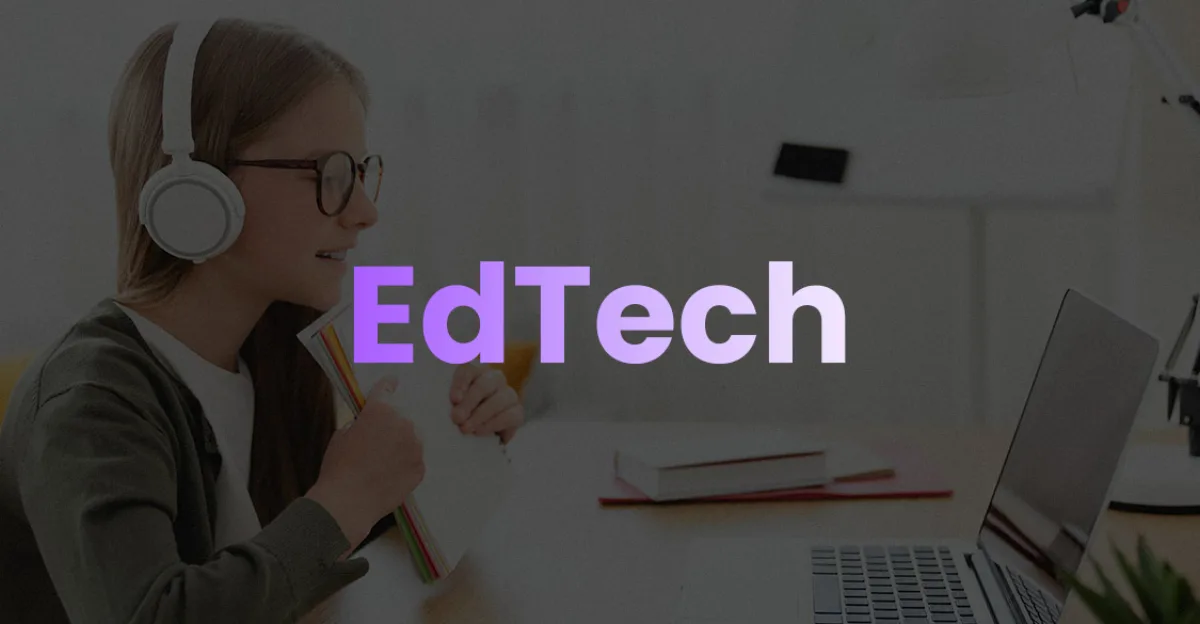
Over the last decade, technology has drastically transformed many aspects of our lives, and education has been no exception. The incorporation of technology into education, known as EdTech (Educational Technology), has opened up a world of possibilities to improve the learning process and the educational experience for both students and teachers. In this post, we will explore how EdTech is changing the educational landscape, how it has revolutionized the way we learn and teach, and how it is transforming academic management in educational institutions.
- Access to information and educational resources
One of the most notable ways EdTech has impacted education is through access to a wide range of information and educational resources online. The internet has democratized education, giving students and educators the opportunity to access e-books, research, online courses and multimedia content anytime, anywhere. This has enabled self-directed learning and extended education beyond the physical boundaries of traditional classrooms, while also facilitating academic management by providing access to relevant information for decision-making in education.
Students no longer rely solely on textbooks and lectures to acquire knowledge. With EdTech, they have access to an endless virtual library with up-to-date and diverse information. This not only enriches their understanding of different subjects, but also fosters their curiosity and research skills, which is useful both for their learning and for the academic management carried out by teachers and school leaders.
- Personalized and adaptive learning
EdTech has paved the way for personalized and adaptive learning, where students can learn at their own pace and according to their individual needs. Using intelligent algorithms and machine learning (AI) systems, educational platforms can analyze each student’s progress and performance, offering personalized feedback and content recommendations suited to their level and learning style. This personalization optimizes the teaching process, improving student comprehension and retention.
Adaptive learning allows students to focus on areas where they need more practice or support, helping them overcome obstacles and develop skills more effectively. In addition, advanced students can access more challenging and enriching content, avoiding the boredom that can sometimes arise with traditional learning. This adaptability is also beneficial for academic management, as teachers can easily identify each student’s individual needs and give them the support they need for their educational development.
- Interactivity and engagement
EdTech has made learning more interactive and engaging. Multimedia resources such as videos, simulations and interactive activities have transformed the way educational concepts are presented. These visual and experiential tools involve students more deeply, fostering greater engagement and enthusiasm for learning. Beyond benefiting learning, interactivity is also valuable for academic management, since it facilitates communication between teachers and students, enabling more effective feedback and closer monitoring of academic progress.
Students can take an active part in the learning process, experiment with concepts and receive immediate feedback on their progress. For example, simulations allow students to visualize complex phenomena and understand abstract concepts in a tangible, practical way. The resulting interactivity and engagement not only improve learning, but also contribute positively to academic management, as greater student participation makes it easier to identify areas for improvement in the educational process.
- Access to information without borders
One of the greatest advantages of technology in education is access to information without borders. In the past, students relied mainly on textbooks and physical libraries to obtain information. Today, with a simple click, they can access a wealth of educational resources online. From digital books and articles to educational videos and online courses, students can research and dig deeper into any topic that interests them. This has greatly enriched learning and allowed greater autonomy in the pursuit of knowledge.
Online education, also known as e-learning, has likewise grown exponentially in popularity. Online courses and programs offer flexibility and convenience so that students can study from anywhere, at any time. This has opened up educational opportunities for people who would otherwise be unable to access traditional training due to geographic barriers or time constraints. In addition, online learning has enabled the creation of global learning communities, where students from different countries can interact and share experiences.
Don’t miss: Project-based learning: fostering creativity
- Assessment and progress-tracking tools
With EdTech, teachers have access to a variety of tools to assess students and track their progress. Online assessment systems deliver instant results, allowing educators to quickly identify the areas where students need more support. These tools also make it easier to monitor individual and group progress, so teachers can adjust their teaching approaches accordingly.
Online learning platforms also allow teachers to track each student’s performance over time in greater detail. This provides a more complete view of academic progress and helps teachers make informed decisions about the interventions and support each student needs. In addition, academic management benefits from these tools, since educators gain a comprehensive view of how each student is progressing and can make data-driven decisions in order to provide a more personalized education.
- Fostering creativity and skills: Latin American success stories
Technology in education is not only about facilitating access to information; it also fosters creativity and skills development. Digital tools give students opportunities to become content creators, producing multimedia projects, blogs, presentations and more. This allows them to express their knowledge and perspectives in creative and meaningful ways.
Some notable Latin American success stories in educational technology (EdTech) are:
- Platzi: a Colombian 100% online education platform founded in 2011, offering more than 700 courses in different fields of study such as engineering and development, design and UX, English, marketing, entrepreneurship and business, and audiovisual production, among others
- Crehana: a Peruvian LMS platform for online courses that focuses on results-based education. This means its courses are geared toward specializations and practical knowledge in creative and digital categories, where learners can progress from beginner to advanced level
- BEDU: a Mexican education startup recognized for developing digital, language and business skills. It aims to unlock the talent of organizations and professionals through professional re-skilling (transformation) and up-skilling (development) in the fastest-growing, most in-demand areas of the labor market.
In addition, technology gives students practical skills that are essential for today’s and tomorrow’s workplace. Skills such as problem-solving, collaboration, digital literacy and online communication are increasingly valued by employers, and EdTech provides an ideal environment to develop and strengthen them.
You may be interested in: How are power skills shaping education today?
In conclusion
EdTech is rapidly changing the educational landscape, bringing exciting opportunities to improve teaching and learning, as well as academic management. Technology has enriched access to information, enabled personalized and adaptive learning, promoted interactivity and engagement, facilitated global collaboration and provided tools for assessment and progress tracking. At the same time, EdTech has fostered creativity and the development of 21st-century skills, preparing students to face the challenges and opportunities of an increasingly digital world.
If you are also interested in taking your school’s academic management to the next level, get in touch with us and discover the different solutions we can offer you!