The new ABC: Reconnecting with students through gamification
Students today face countless digital distractions. Learn how gamification helps schools reconnect with them and boost classroom engagement.
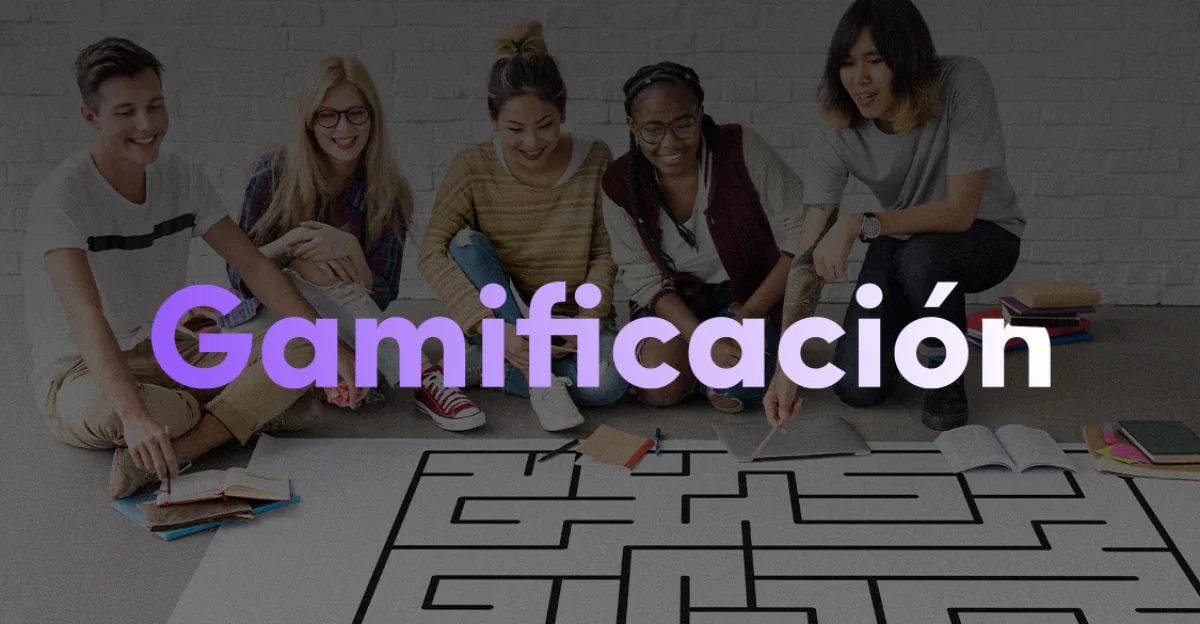
In today’s digital age, students face a great number of distractions that can make it harder for them to participate actively in the learning process. However, gamification — a strategy that brings game elements into the educational environment — is an effective way to reconnect with students, fostering their engagement and motivation in the classroom. That is why it is essential to consider it an integral part of your school’s academic management.
What is gamification and what are its benefits in education?
Gamification means applying game elements and dynamics in a non-game context, such as the classroom, to increase student participation. This makes the teaching and learning process easier, mainly because play allows students to:
- Feel emotions
- Spark their curiosity
- Create moments of fun
- Play different roles
- Put their knowledge into practice
- Use their creativity
Consequently, some of the benefits of using gamification as part of academic management are:
Increasing motivation
First, gamification takes advantage of the intrinsically motivating nature of games to involve students in activities that encourage them to reach goals and overcome obstacles, with the level of difficulty increasing progressively. When they achieve the proposed objectives, they are rewarded with positive reinforcement that drives them to keep going.
Encouraging collaboration
In addition, the essence of most games involves teamwork, where students have to learn to act together to overcome challenges and reach common goals. In doing so, they learn to recognize the contribution of each group member and to value their differences.
Promoting active participation
Finally, by turning learning into an interactive and engaging experience, students become the protagonists of their own learning process, making decisions and solving problems in a safe environment.
We recommend: Multiple intelligences: Rethinking school assessment
Augmented reality, the next step in gamification
With the passage of time and the emergence of new technologies, gamification is taking a new direction with the help of augmented reality. In addition to being a resource that can be implemented in physical settings, it can now be taken into virtual space, bringing students closer to increasingly realistic contexts where they can put their skills into practice more effectively and immersively.
In fact, experimenting in simulated environments that replicate real-world situations in an interactive and immersive way is the next step toward more innovative education. Some examples of what can be taught with gamified augmented reality tools include:
- Trips to historical settings where students solve puzzles
- Virtual labs to conduct experiments, observe chemical reactions and manipulate molecules
- Interactive maps to explore different regions and ecosystems of the planet
- Space missions to collect scientific data
The success of gamification: the science behind it
All of this makes it clear that gamification is an excellent and highly versatile resource for education; however, the secret behind its success is its scientific foundation. From the perspective of neuroscience, play is a crucial instrument for learning for both children and teenagers, because it creates spaces where reality is simplified so that students can explore the world safely, guided by the teacher.
These processes are related to the release of four key neurotransmitters:
Dopamine
This is the neurotransmitter responsible for pleasure, and it is closely linked to motivation and to behaviors aimed at obtaining rewards. For this reason, it is stimulated during gamified activities, where students overcome challenges and receive recognition.
Oxytocin
Also known as “the love hormone” or “the social bonding hormone,” it helps reduce stress and is released during positive emotional connections — for example, those involving trust, loyalty and generosity, to name a few.
In gamification, it can be enhanced through collaborative work, as well as by creating a welcoming and empathetic school environment with positive feedback.
Serotonin
This neurotransmitter is one of those responsible for stabilizing mood and providing well-being, making it essential for achieving a sense of happiness. Because it is associated with self-esteem, a sense of belonging and purpose in life, it can be encouraged in the classroom through meaningful learning that relates to students’ daily lives and makes them feel productive.
Endorphins
Like the other neurotransmitters, endorphins are released in moments of achievement and when overcoming challenges, generating a feeling of euphoria and satisfaction. Some ways to encourage their production in class are physical activities or body movement, as well as activities that are not only competitive but also fun and exciting.
Don’t miss: Improve the classroom experience with academic management software
Gamification and academic management: take your school to new horizons
There is no doubt: in practice, gamification is a valuable resource for reconnecting with students because it involves them directly in their own learning process, fostering their desire to participate and their enthusiasm for taking on new challenges. By incorporating game elements, challenges and rewards, gamification creates a stimulating environment where students feel motivated and committed.
All of this translates into greater satisfaction with daily classroom activities, creating memorable learning experiences that will stay with them for the rest of their lives.
Are you interested in promoting innovative academic management that improves the educational experience at your school? At Phidias, we have more than 18 years of experience dedicated to finding cutting-edge solutions tailored to each institution. Contact us and discover how we can help you!