Neuroscience in Schools: Creating Lasting Learning
In recent years, understanding how students' brains work has become essential to fostering their intellectual and emotional development.
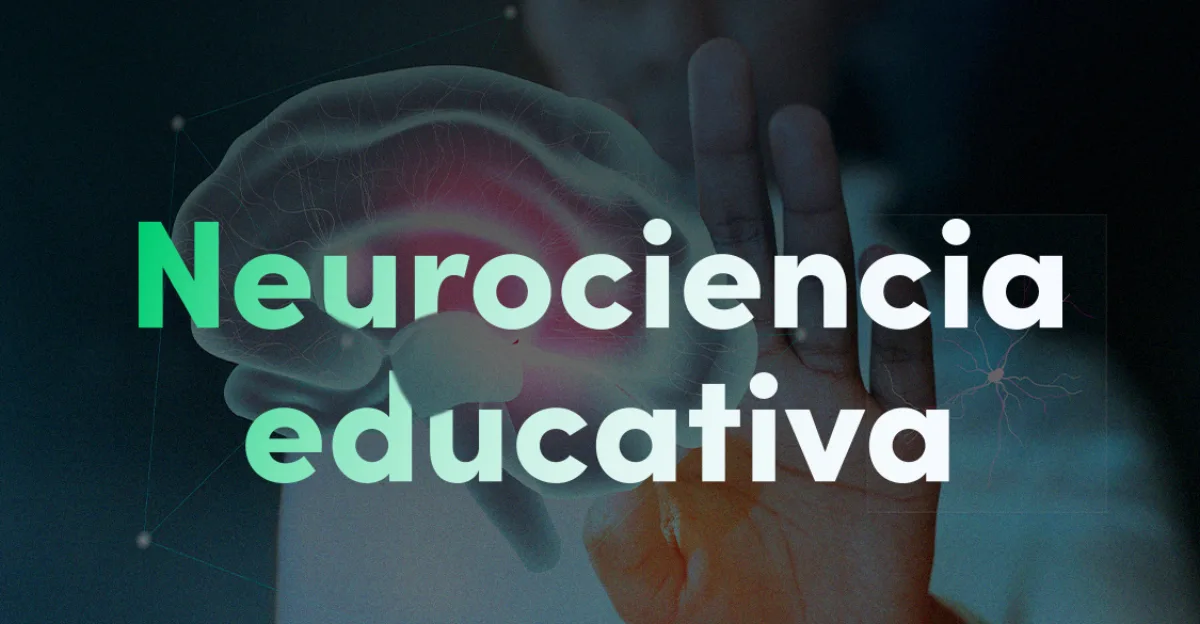
In recent years, understanding how students' brains work has become essential to fostering their intellectual and emotional development. In this context, schools' academic management is playing a key role by coordinating strategies that bring this new scientific knowledge directly into the classroom.
Below, we explain the science behind how our brains learn and how it can be used to achieve deep learning in students.
Integrating neuroscience into academic management: an innovative approach
Today, thanks to neuroscience, we know that our brain changes continuously when we learn, but also when we teach. We also know that this organ, responsible for thinking, is also in charge of feeling, which is why the process of acquiring knowledge is closely tied to emotions.
As a result, each new piece of learning and each new experience, if it is meaningful to us, is stored as a mental network, that is, interconnected with prior knowledge that may come from the classroom but also from any other aspect of our lives (social and cultural context, personal experiences, etc.).
However, integrating this new information into deep knowledge takes time and practice. Here's why: during the learning process, new synapses, the connections between our neurons, are formed, and this bond only grows stronger when we repeatedly return to a similar situation.
This ability of the nervous system to change constantly with experience is called plasticity. It means that our mind keeps building itself throughout our lives, changing its structure, generating neurons, and strengthening or weakening the connections between them, regardless of our age.
What does all this mean for teachers in the classroom? That emotions, connecting information, and spaced learning are important for achieving a richer, deeper, and longer-lasting education for students.
Tips for teachers: strategies to foster deep learning in the classroom
Engage emotions
As mentioned, as we explore the connections between thinking and feeling in the educational process, we see that the human brain is not only a cognitive organ but also an emotional one. Consequently, the most powerful and longest-lasting learning experiences are those that excite and motivate students.
That's why it is essential to encourage play and experimentation, where students can put their knowledge and hypotheses into practice and find satisfaction in understanding the world around them.
This is also an important reminder that teaching always goes beyond simply passing on information, since it also involves nurturing students' emotional well-being. To do this, it is crucial to create an environment where they feel safe, valued, and capable of reaching their full potential.
Recommended reading: Student Motivation and Academic Performance: What Role Does the Teacher Play?
Connect information
On the other hand, because learning is not isolated but rather interconnected in mental frameworks, it is easier for students to learn concepts and retain them in the long term if they are presented in an integrated way. For example, through projects that develop different skills (social, emotional, analytical) and help them understand various topics within a subject or even across different subjects.
In fact, going beyond disciplinary boundaries allows them to connect different areas of knowledge, develop a more solid understanding, and apply what they know in real situations. This way, they can approach what they have learned from multiple perspectives, gaining a broader view of each lesson.
You may also be interested in: Improve Your Classroom Experience with Academic Management Software
Consider the time factor
Finally, for neural connections to grow stronger, it is essential for the brain to be able to review information. And this can only be achieved through learning that is spaced out over time, allowing each new lesson to be reviewed, practiced, and repeated.
This gradual approach allows the brain to absorb information, build solid connections between the knowledge acquired, and integrate it deeply into a mental framework that will serve students in the long run.
Without a doubt, advances in science have given us an ever better understanding of the complexity of how the human brain works and, with it, have allowed us to uncover some of the mechanisms underlying the teaching and learning process in order to improve school dynamics.
Integrating this knowledge into teaching strategies has become a necessity for schools that want to stay at the forefront with academic management that is relevant to new generations. That's why more and more institutions are working to create learning environments where motivation, meaningful learning, and the practical application of knowledge are an integral part of daily activities.
If you're also interested in taking your school's academic management to the next level, get in touch with us and discover the different solutions we can offer you!